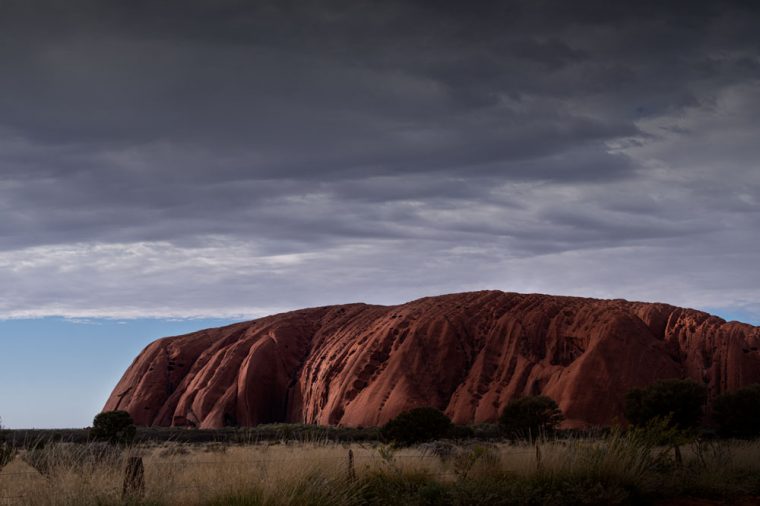
Sofia has tasked us with the idea of ANCIENT for the challenge this week. When I first saw it, I thought but Australia isn’t that old, we don’t have ancient buildings or relics. Actually, we do have relics, but they come from other countries and are in museums. Then I thought about mountains, aren’t they ancient? Then I looked up the definition and decided that perhaps what I would look at is SACRED.
We have many sites in Australia that are considered sacred sites to our indigenous population. I don’t know that I have visited many of them, but one I have visited, which is perhaps Australia’s most famous, is the Uluru and Kata Tjuta National Park in Central Australia.
However, there is something I need to do before I start this post.
I would like to acknowledge the Aṉangu people as the traditional owners of the land that includes and surrounds Uluru and Kata Tjuta. I would also like to pay my respects to the Elders past, present, and in the future, and totally respect their ongoing contribution to the cultural heritage of the area.
This place has been a massive tourist attraction for a very long time. However, the traditional owners fought hard to have it returned to them so they could control what happened there. I don’t think they do it on their own, but they do have some government help. Not sure how much.
You often hear people talking about how they are not allowed to take photos anymore of certain parts, which are for ceremonial reasons, and those places are more sacred. Just like we are all expected to respect the wishes of other religions, the same should be done here.
This first gallery has a few photos from both places, with some rock paintings as well.


You can take scenic flights, and you get to really see how big Uluru, or the white man’s name, Ayers Rock, really is. From the air you can see how people were able to walk on it, which is no longer allowed.
It took the Aṉangu people quite a few years to put a stop to that. I guess we could liken it to people walking on church roofs, it just isn’t done. They also ask you not to photograph the scar that is left from the chain and posts that were used by people to walk up there.
It is all about respect.


This last gallery is of Uluru taken at sunrise. I thought it was interesting to see how much it can change when you are standing there for a couple of hours.


This is my entry for Ancient and I hope it fits the brief. I guess you could say Uluru is ancient, though we do tend to think of man-made objects when it comes to that word.
Thank you, Sofia, for being our host this week.
If you would like to participate in this great challenge, then go to the following link to find out how to join the Lens-Artists Challenge. Click here for more info. Don’t forget to put a link in your post back to the host.

Beautiful!
Thanks Pamela.
Great post Leanne!
Thank you Julie.
A beautiful post on respect and natural beauty. I had never seen Uluru from so many different angles – and the light travelling over its body made this sacred place even more special. I have never been to Australia, but this place would be one of my first goals if I did. Thank you for posting on it – I hoped you would!
Thank you Ann-Christine. I heard about the different light there, but didn’t really believe it until I saw it for myself. It is a great place to visit, but boy it is expensive. You’re welcome, glad you liked it.
Fascinating! You’ve captured the light falling on Uluru so beautifully!
Thank you PR.
Wow! I had seen a few photos of Uluru. You took this to another level. Beautiful gallery, Leanne.
Thank you so much Egidio.
Great choice! . I was thinking about what I would post if I had taken part. After considerable thought about ancient, sacred places I decided I would have chosen “Juanito” my old traditional Peruvian bar in nearby Barranco. -I admit….not quite as old as Stonehenge or the Acropolis. Stirred by this thought, half an hour after reading, I was there quietly sipping a Chilcano. No, joking apart, a great choice of striking views.
Thank you Geoff. I have never heard of that place, maybe you need to do a post on it anyway.
I’m sure this fits the brief and I found your descriptions and images fascinating, especially seeing how the light changes the rock. You’re so right about the need to respect indigenous beliefs – I’m always horrified when people don’t seem to think that matters.
Thank you Sarah. They say the light is always different on the rock. I think it is very important. I am horrified too, some people just don’t have respect for anything, sadly.
Leanne I was so sure you were going to post Uluru. I would have too if I’d visited it. I was thinking about it as I wrote my post. Your post is full of beautiful images.
You were spot on Ritva, I didn’t know what else to do. Thank you so much.
It surely does, Leanne. Ancient traditions so well represented in your post, with the due respect too. Your photos are amazing, as always, but it’s your words that really did it for me. Excellent post.
Thank you Sofia, glad to hear the words were really important too.
Happy to see these images from Australia. Thanks for sharing Leanne.
Thank you so much Teresa.
I was at Uluru at dawn in about 2007, with an eco-respectful small van group. My memory is that at the time the site was being co-managed by the indigenous peoples and by the state parks authorities. There were numerous signs very politely asking people please not to climb Uluru, giving the reasons why; it upset me to see even so people trekking on up. So rude! Even when we as tourists are not on land defined as sacred by an indigenous nation, we should remember we are visitors in someone else’s home, it is their home not our toy to play with, and we should behave with respect and fit in as best we can
Sounds like a good trip Penny. It is still co-managed I believe. Yeah I heard they had signs and people just ignored them. They stopped it in October 2019 and I think it is illegal to do it now. They have removed everything that would help people climb it too. I like they have made tourists be more respectful. Thank you Penny.
these are so powerful and fascinating. they hold the sacred in them still
Thank you Beth.
Stunning images, Leanne. Beautifully captured.
The colours at sunrise are amazing.
Thank you Vicki, it was really beautiful.
I’ve been getting outside every time the wind drops, it has been nice, but this rain is even better.
Love the colours in your imagery, a truly fabulous post!
That’s wonderful, thank you Kate.
Gorgeous photos, Leanne.
Thank you Carol.
So interesting to see something of a culture so very different from our own European heritage. Lovely images.
Interesting too that it was a European culture, the British, that stole it from them. Glad you like it Margaret, thank you.
The Brits have been responsible for far too much that they have little to be proud of in colonial exploitation. I mean of course, ‘we’, not ‘they’ 😕.
Yeah they were, though it was a long time ago. Thankfully they don’t do that sort of thing now.
We hope ….
Yeah, they don’t have the power they used to have.
You ended perfectly…Respect.
Absolutely Ted, thank you.
It feels sacred with the way you captured the sites with such graceful respect. As usually I love the lighting your used.
Thank you Donna, I think it is important to show your respect with places like this, especially when you find out why they are sacred.
I love the photographs and love even more what you explain about respect for the people whose sacred site it is.
Thank you Rebecca, I think paying your respects to the traditional owners is so important.
Yes, too long forgotten and too long disrespected.
That’s for sure, I’m so glad in Australia they are making an effort to acknowledge them so much more.
This is a great tour of Uluru and other ancient structures, and a great commentary on the significance and importance of indigenous cultures.
Thank you so much Joanne.
Leanne, I love how you chose to feature these ancient sacred sites for this challenge. The photos are stunning.
Thank you Beth, seemed like the best choice.
Your photos capture the colour of the rocks so beautifully no matter what the quality of the light is.
Thank you Laura, that’s really nice of you to say.
Great post, Leanne, and well done for acknowledging the Anangu people
Thank you Sue, it is something that most people do in Australia, we always acknowledge the traditional owners of the land we are on.
That is good
Yeah I think so too.
Very nice. Very nice photo
Thank you Ziggy.
We were fortunate to have visited Uluru during our visit to Australia years ago. I was happy to read of the restrictions that have been imposed since our visit as I felt it was terribly disrespectful for people to walk on it. As you say, it is a sacred site and one can truly feel its power and spirit. We were fortunate to see it from sunrise through sundown as it changed so dramatically – as shown in your beautiful images.
Yeah, I agree, there are signs everywhere now saying don’t climb the rock. It is incredible being in the shadow of it, that’s for sure. So happy to hear that have been there Tina. Thank you.
Absolutely beautiful, Leanne!
Thank you Linda.
Thanks for the detailed post, Leanne. Very interesting.
Robin
Glad you liked it Robin, thank you.
You don’t get much more ancient than that. Or more sacred. Fantastic and respectful images.
Thank you bish, it is very ancient.